There’s little point doing sales in Europe during the summer holidays because everything shuts down, right? Wrong.
It’s a bit of a misconception that European offices are completely deserted for the entire summer. Things definitely get a lot quieter, but the traditional European summer shutdown is not what it once was.
Summer can actually be a great time to make and nurture connections if you do it tactfully and strategically. But what is the right approach to sales with European prospects during the summer holidays?
In this article we’re going to examine the idea of the European holiday slump, look at how European summer holidays are changing (and why), and most importantly, discuss what you can be doing during the summer months to keep your pipeline alive and your contacts engaged.
What is the European Summer Holiday Slump?
The European holiday slump is when businesses quieten down during the summer. In the past this may have looked like a complete shutdown of operations until September, but today things are different, and while offices in Europe may be a little quiter, business is still going on.
Of course many Europeans still take summer holidays, but not usually for the whole season. In France, for example, most people now split their holidays between summer and winter, so generally their summer breaks won’t be longer than two to three weeks. This is in contrast to traditional French summer breaks, where most people took the whole of August off work.
Quieter offices can actually be a good thing too, when it comes to lead generation. It potentially means that those people in the office are less stressed and have more time to engage with you – more on this shortly.
It is undeniably harder to close sales during the summer with various contacts away, so sales cycles can really slow down here, but that doesn’t mean you can’t use this time productively. You can put in some incredibly valuable work over the summer that will really start paying off once the holidays are over and key stakeholders are ready to make decisions again.
European Summer Holidays are changing
As we’ve said, the summer ‘shutdown’ is not what it once was. In fact, data reveals that trends towards long summer holidays are reducing among European workers.
There are a number of reasons for this, including:
- Cost-of-living pressures: Many people simply can’t afford to take protracted breaks for several weeks at a time.
- Hybrid-remote working: Many people who work from home often stay connected to goings-on at work even during time off in the summer.
This graph shows how the average duration of personal trips has trended down over recent years:
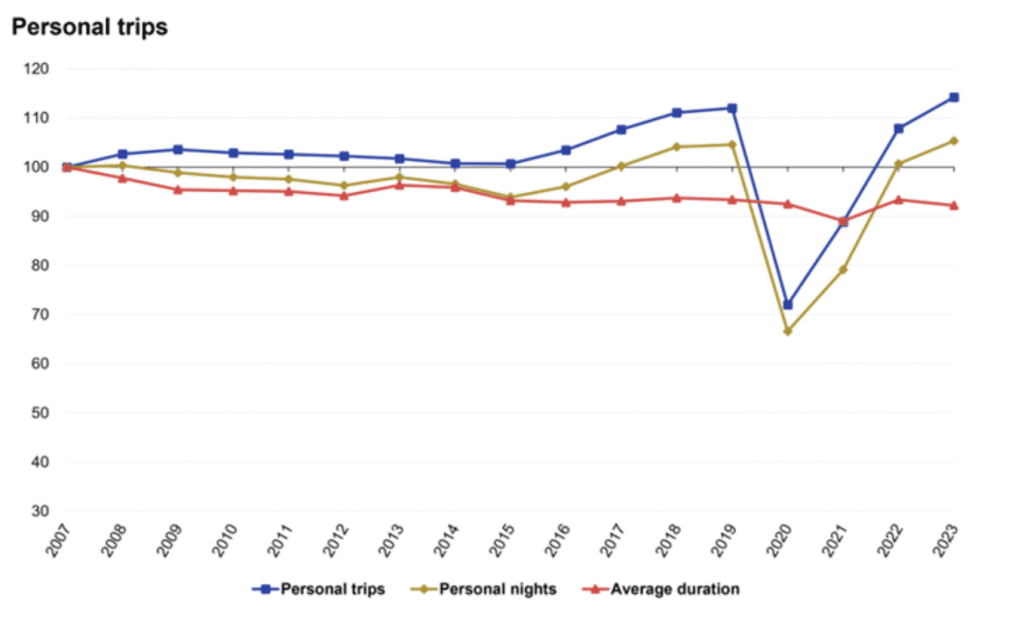
These changes reveal opportunities. Summer is now an important time for sales and a period when you can engage prospects and make real progress towards conversions.
So, if these downtimes aren’t actually downtimes, but just quieter times, what should you be doing to keep your sales engine running?
What Can You Do Over the Summer Holidays?
Yes, offices will be quieter in Europe during the summer, but that doesn’t mean you have to sit around and wait until Autumn. Summer is a great time to generate and nurture leads, even if you can’t expect many to close just yet. And there are plenty of other things you can do to keep your pipeline active.
Here are some actionable tips to follow to help you be strategic with your sales activities and to make sure you don’t let any opportunities pass you by during the summer months.
Prepare for the twilight period
Summer should be a time for preparation. The period between September to November is a golden window in which many big budgeting decisions are made for the coming year. There are no major holidays during this period so everyone is back at work and contracts can be signed – provided your sales campaigns began early enough. With this in mind, summer is the perfect time to kick off your campaigns to get a head start and make sure you’re ready to close deals in a couple of months’ time.
Maintain relationships with your leads
Summer is also a fantastic time to build and maintain relationships with your European leads. Prospects suffer less meeting fatigue and are often less stressed during this quieter time of year, which means they’re more open to discovery calls and catch-ups. Having fewer distractions can mean that they’re willing to speak for longer, meaning better engagement and a better chance of converting them down the line. Even if key stakeholders are away, by keeping conversations going with their team you increase the chances of closing the sale when everyone’s back in the office.

Focus on onboarding
As the summer period is quieter for most businesses, it can be a great time to begin new campaigns, make new hires or even consider onboarding a sales outsourcing agency. Why? With more downtime, your management team is more likely to have capacity for the onboarding, training and business alignment work needed to work well with an outsourcing agency, and this investment of time will in turn give you much greater sales capacity and firepower.
Reallocate to active markets
It’s important to note that holiday periods differ somewhat across Europe. So, while France gets quieter during August, Nordic people tend to take three to four weeks off during July. Across the continent other nations’ holidays are staggered across the summer months, while in the UK and Germany, businesses remain largely active during summer, especially in B2B sectors.
As well as illustrating that there’s no mass shutdown of Europe during the summer, this goes to show that there are always active markets to engage with, rather than having to pause your sales activities completely. You just need to do your homework and know where you’re likely to get the most traction. Then you can reallocate your sales capacity to those markets.
Don’t Let Summer Slow You Down
We’ve established that the traditional European summer shutdown is not what it once was. While offices may be quieter during summer months, economic pressures and remote working trends mean fewer people are taking extended holidays, creating ongoing opportunities for sales engagement.
On top of that, rather than pausing sales activities entirely, you should be strategic by reallocating efforts to active markets, as well as using the quieter period to maintain relationships, and prepare campaigns for the critical September-November window.
If you can do that, maintaining consistent touchpoints and keeping leads alive, you should be in a great position to start closing sales as soon as your prospects are ready.