
If you want to generate enterprise leads, it’s key to understand that approaches that typically work for smaller organisations might not have the same impact.
For numerous reasons, which we’ll get onto very soon, enterprise lead generation requires a unique, structured strategy. Without this carefully plotted direction, you won’t get the ROI and other measurable outcomes you want to achieve – and which are very achievable when enterprise lead gen is done right.
And that’s exactly what we’re going to explore in this blog post. We’re going to look at the different types of lead generation, why outbound is key, differences in approach for enterprises versus startups, and effective strategies and tactics that have been proven to work, and will help you drive and nurture enterprise leads, and deliver that all-important ROI.
The 4 types of lead generation
1. Outbound (Direct)
Outbound or direct lead generation refers to cold outreach done via email, phone, and (often for B2B) LinkedIn, to prospects who haven’t yet engaged with your brand.
Outbound gives you control over who you target and when, making it ideal for reaching specific ideal customer profiles (ICPs). However, it requires a significant amount of personalisation and persistence to break through the noise, particularly at enterprise level.
2. Inbound (SEO, Advertisement)
This includes content marketing, search engine optimisation, and paid advertising – methods that draw prospects to you, rather than you going after them.
Inbound builds credibility and attracts interested buyers, but it takes time to generate results, and can be difficult to attribute directly to specific accounts, especially in an account-based marketing (ABM) strategy.
3. Referral (Word of Mouth)
Referral or word-of-mouth leads are generated through customer recommendations, partner networks, and personal connections.
Referrals typically convert at higher rates because they come with built-in trust, but they’re difficult to scale and predict.
4. Marketing-generated (Events, Webinar)
This refers to leads captured through conferences, trade shows, roundtables, and virtual events like webinars.
These marketing tactics create face-to-face engagement opportunities and accelerate relationship building, but they require significant investment and planning.
All of these approaches can be useful for enterprise lead gen, but carefully tailored outbound strategies are particularly important.
Why Outbound Lead Generation is Essential for Driving Enterprise Leads
If you want to drive enterprise leads then outbound lead generation has a key part to play. But it shouldn’t be thought of as a standalone strategy – outbound integrates into larger ABM efforts and should feed into marketing and multi-touch sales funnels.
Prospects are often warmed up with targeted content, events and webinars to generate marketing-qualified leads (MQLs). Then lead generation takes the baton and converts these MQLs into sales-qualified leads (SQLs) with direct outreach and qualification, before the sales team takes over to close those deals.
This kind of approach makes sure that:
- High-value accounts receive the right attention and resources
- Sales teams focus on genuinely qualified opportunities
- Marketing efforts translate into measurable contributions to the pipeline
- The customer journey is mapped and optimised across all touchpoints
Using a sales outsourcing agency for enterprise lead generation has a number of benefits. These include preserving in-house resources, accelerating pipeline growth through proven expertise and a ready-to-go tech stack, and the flexibility to scale up or down efforts as strategy and budget dictate.
A final, significant benefit is a consistent flow of qualified enterprise leads, which translates to more predictable revenue forecasting, smoother sales cycles, sustainable growth over time and long-term business stability.

Pros and Cons of Generating Direct Leads for Enterprises vs Startups
If you, as a business development representative (BDR), understand the unique challenges and advantages of targeting enterprise-level organisations versus startups, it will help you allocate your resources effectively, while setting realistic expectations.
Enterprises
Pros
- Clear ICP & Titles: When doing lead gen among enterprises there is a clear ideal customer profile. On top of this, enterprise organisation charts – while large – are structured, meaning you can find and target defined roles, like CIO, VP Procurement, or Head of Digital Transformation, making research more straightforward.
- Multiple Entry Points: Large enterprises have numerous departments and divisions, giving you several potential pathways into the account. If one stakeholder isn’t responsive, you can pivot to another.
- High Perceived Value: Booking an enterprise meeting carries significant weight internally. Leadership values these opportunities because of the big logo potential and contract size.
Cons
- Hard-to-Reach Decision-Makers: Senior executives get flooded with vendor emails and calls, making it difficult to get a response.
- Longer Nurture Cycles: Even after booking a meeting, it may take months before it becomes an actual opportunity. This is often due to internal approval processes and budget cycles.
- Gatekeepers & Systems: Many enterprises use procurement platforms, strict vendor onboarding processes, and executive assistants who outreach and again, make it tricky to make initial contact.
- Higher Research Requirements: Personalising outreach for enterprise personas requires considerably more upfront time and effort per lead, but is necessary to show relevance and credibility.
Startups
Pros
- Higher Response Rates: Founders and senior executives are typically easier to reach via cold email, or even social media, leading to better engagement.
- Faster Meeting Conversion: Startups don’t have the multiple approval layers that are common to enterprises, so if your pitch resonates, you can often land a meeting quickly.
- Broader Messaging Works: With startups there’s less need for deep personalisation initially. Startups are also generally more open to exploring new solutions if they address a clear pain point.
- Volume-Friendly: Because less deep personalisation is needed and because decision-makers are more easily defined in startups, it’s easier to scale outreach campaigns.
Cons
- Smaller Total Addressable Market (TAM) Per Account: A startup might only have one or two relevant stakeholders, limiting your opportunities if they don’t respond.
- Unpredictable Needs: Startups pivot frequently, meaning what’s relevant today might not be tomorrow. This can therefore result in wasted effort.
- Lower Perceived Internal Value: Booking numerous startup meetings may be seen as ‘lighter weight’ by sales leadership, compared to enterprise logos or other large businesses.
- Limited Expansion Paths: Even if you successfully generate a lead with a startup, the organisation’s size limits the number of opportunities you have with that account.
Effective Enterprise Lead Generation Strategies
Successful enterprise lead generation usually relies on a combination of a number of complementary strategies to build awareness, establish credibility, and create opportunities for potentially lucrative conversations.
We’ve touched on some of these strategies already, but let’s dig a little deeper and discover the potential the following approaches offer:
Account-based Marketing (ABM)
Account-based Marketing (ABM) treats individual high-value accounts as markets in their own right, and focuses resources on a particular number of target enterprises with high revenue potential.
It’s an effective strategy at enterprise level because it aligns with how enterprise buying works. Complex B2B purchases involve multiple stakeholders across procurement, IT, operations, and executive leadership. ABM uses personalised campaigns to reach all these decision-makers simultaneously with relevant, coordinated messaging.
At the heart of effective ABM is hyper-personalisation. This means going way beyond using someone’s first name in an email. It involves properly researching the account’s business challenges, recent company news, their tech stack, competitive positioning and strategic initiatives. Once you’ve done your research to this level, your outreach should demonstrate exactly how your solution addresses their pain points and solves any problems they may have.
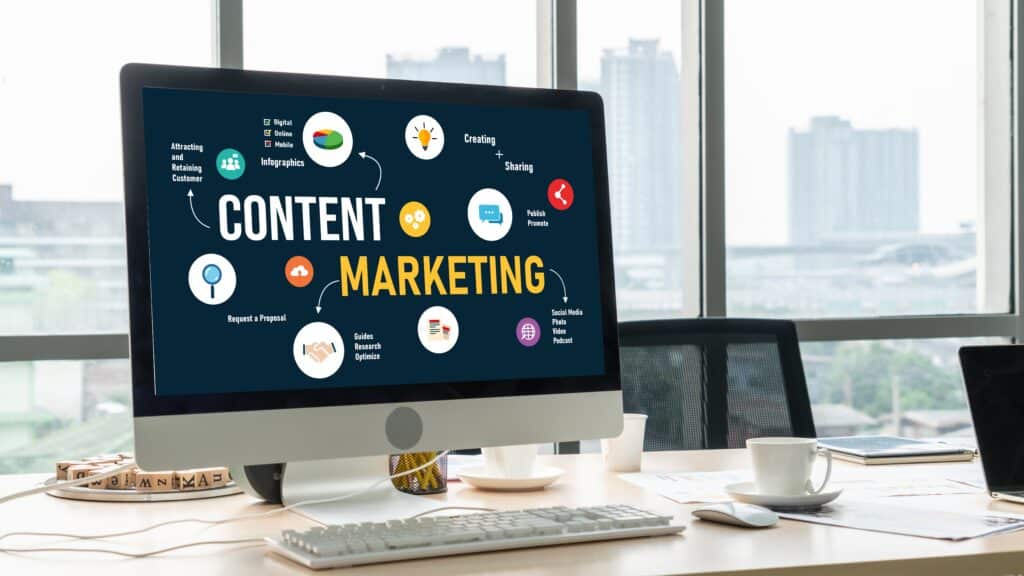
Content marketing
Content marketing is vital to position your organisation as a thought leader with deep expertise in your domain. On top of this, it provides the right nurturing materials at the right times to move prospects through longer enterprise sales cycles.
What the right content is will depend on your prospect, but thought leadership content – such as comprehensive articles, research and strategic frameworks – can build credibility with decision-makers, while case studies and whitepapers can offer the substantive information that procurement teams and technical evaluators look for in their due diligence process. Webinars can also be very useful as interactive opportunities to address questions and objections.
Quality content attracts and warms up prospects before any direct outreach occurs, making conversations more informed and therefore productive. Content marketing allows your marketing team to track engagement and hand MQLs to your outbound team to follow up on.
Networking
Digital channels can’t be overlooked for any kind of lead gen today, but there are still great benefits to meeting people face-to-face. Networking at conferences, trade shows and roundtables is hugely valuable for enterprise lead generation, particularly in certain industries.
Law firms, recruitment agencies, and professional services companies rely heavily on networking and referrals, largely because their business model depends on personal relationships and reputation. Technology, SaaS, and eCommerce companies generally benefit less from networking, though it can still play a valuable role in an overall strategy.
Events can lead to meaningful conversations because you’re not competing for attention in a busy inbox, and you might have the chance to speak to multiple stakeholders from the same account.
Outbound Lead Generation
As we’ve discussed, outbound lead generation remains one of the most effective methods for building relationships with enterprise prospects who aren’t yet aware of your offering.
This is because it gives you control over targeting and timing. Rather than waiting for the right prospects to find you, you can identify ICPs and start conversations when they align with your capacity and priorities.
However, generic templates and campaigns just won’t work. Your messaging must demonstrate that you’ve researched their business in depth and that you understand their industry challenges.
A multi-channel enterprise lead gen strategy delivers the best results, but in order to truly qualify a lead you will have to have a conversation, so the importance of direct lead generation can’t be overlooked.
Tactics to Enhance Your Outbound Enterprise Lead Generation
Outbound success comes from doing the fundamentals well and doing them consistently. Here are the key tactics that will enable you to generate high-quality leads among enterprise businesses:
Identify Your Prospects
Accurate prospect research is essential for effective outbound lead gen. Use data providers, prospecting tools, and your refined ICP criteria to make sure you’re targeting the right enterprises and the right people within those organisations. Your prospect list will be smaller than a one-to-many approach aimed at smaller businesses, but each account represents significantly higher potential value.
Engage Prospects
Engage your prospects using a multi-channel approach – this includes LinkedIn, email, phone and events – and focus on personalisation. Reference specific details from your research – a recent product launch, an expansion into a new market, a challenge mentioned in their annual report – and demonstrate that you’ve done your homework.
Most importantly, provide value upfront. Don’t lead with product features or a meeting request – let them know how your product can solve their problems, share a relevant insight, or point to a useful resource.
Align Sales and Marketing
Integrated campaigns where sales and marketing are complementary drive much better results than siloed efforts. When both teams align on ICPs, target accounts, messaging and KPIs, you create a cohesive experience for prospects across all touchpoints.
If you align well, marketing can provide sales with qualified MQLs, and sales can provide feedback on lead quality, helping marketing refine campaigns and targeting. Shared metrics are essential, as are pipeline-focused KPIs that both teams influence.
Nurture Your Leads
The reality of enterprise sales cycles means long-term nurturing is essential. Rather than giving up after a few unanswered emails, implement drip campaigns that keep your solution top-of-mind over months, or even years.
You can effectively nurture enterprises with:
- Educational content addressing different stages of the buyer’s journey
- Case studies demonstrating success with similar companies
- Invitations to webinars and events
- Quarterly check-ins from your BDR team
- Relevant industry insights and thought leadership
The goal is to build trust and credibility over time. When your prospect is finally ready to move forward, you want to be their first call because you’ve consistently provided value and slowly built trust.
Understand Your ICP Inside Out
Knowing your ICP deeply means you can address their pain points directly, and understanding their business – its stakeholders, processes, budget approval cycles, procurement needs and decision-making hierarchies – enables you to tailor your strategy to this structure.
It’s also key to remember that while your contact is part of a large organisation, they’re still an individual doing a job, with their own goals and frustrations – so relationship building is hugely valuable.

How Much Do Agencies Charge for Enterprise Lead Generation?
The amount agencies charge for enterprise lead generation depends on the types of industries you’re targeting, the campaigns required to engage them, and the number of BDRs needed to do this successfully.
At E360 we provide dedicated, senior BDRs with the ability to understand complex propositions, navigate enterprise accounts, and provide qualified leads in B2B industries where decision makers are constantly bombarded with enquiries.
Our personalised, human-led approach makes the essential difference in this ever increasing AI- and volume-based sector.
What is the Best Lead Generation Strategy for Your Business?
Unsurprisingly, there’s no one-size-fits-all answer. The best lead gen strategy for your business depends on your specific goals, industry, target market maturity, deal-size economics, sales cycle length, and available resources.
Outbound, inbound, referral and marketing-based approaches all play important parts in a blended approach, which – for enterprise level businesses – must focus on understanding your ICP deeply, providing real value at every touchpoint, and being consistent over a potentially long sales cycle.
Are you ready to start generating high-quality enterprise leads for your business? Get in touch with the team here at E360 and we can discuss how we can accelerate your pipeline growth and deliver measurable ROI.
